

A local customer may no longer search only for “best dentist near me” or “digital marketing agency in Mumbai.” They may ask ChatGPT, Gemini, Google AI Overviews or another AI-powered search tool to recommend a business based on their needs, location and preferences.
That changes the local search game.
For local businesses, visibility increasingly depends on more than rankings and keywords. AI systems need enough reliable information to understand who your business is, what you offer, where you operate and why your business is relevant.
This is where AI search optimization becomes important. The goal is not to replace local SEO, but to build a stronger digital presence that can be understood across both traditional and AI-powered search.
How Local Discovery Is Changing?
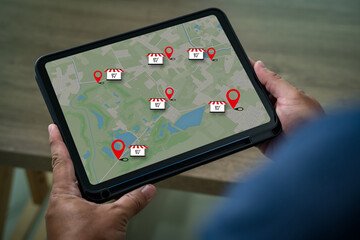
Traditional local search generally revolves around search rankings, Google Business Profile visibility, maps, reviews and location-based queries.
AI search adds another layer. Instead of presenting only a list of businesses, AI systems can interpret a longer question and generate a recommendation or summary using information from multiple sources.
For example, a customer might ask:
“Which hair clinic in Mumbai offers non-surgical hair loss treatments and has good patient reviews?”
The system needs to connect several pieces of information:
- Business category
- Services offered
- Location
- Reputation
- Website content
- Reviews and third-party mentions
- Other signals that establish business relevance
This means local businesses should think beyond ranking for one keyword. The objective is to build a consistent and understandable local entity across the web.
Our AI SEO approach explores how traditional SEO is evolving as search becomes more conversational and AI-driven.
Local Entity Signals
AI systems need context. A business should be clearly identifiable across its website, Google Business Profile and other relevant online sources.
Start by making the basic business information consistent:
- Business name
- Address or service area
- Phone number
- Website
- Business category
- Opening hours
- Main services
- Locations served
But consistency alone is not enough.
Your website should clearly explain the relationship between the business, its services and its locations. For example, a real estate company serving Kharghar should not simply mention “Kharghar” in its footer. Its service pages, property content, contact information and local references should collectively establish its connection with the area.
Structured data can also help search engines interpret information such as a business’s organization, location, services and other relevant attributes.
Think of this as entity clarity: the more clearly your business can be understood, the easier it becomes for search systems to associate it with relevant local queries.
Website and Location Content
A local business website should answer the questions a potential customer is likely to ask before contacting the business.
A service page should make it clear:
- What service is provided
- Who it is suitable for
- Where the service is available
- What the process involves
- What customers should consider
- How to enquire or book
Location pages can be useful when a business genuinely serves multiple areas. However, creating dozens of near-identical pages with only the city name changed adds little value.
Instead, make location content specific.
A clinic serving Mumbai and Navi Mumbai, for example, can discuss the locations it serves, accessibility, relevant services and practical considerations for patients in those areas.
This approach is stronger than simply repeating phrases such as “best service in Mumbai” throughout the page.
Strong SEO services should therefore consider technical SEO, useful content, entity signals and local search together rather than treating them as separate activities.
Google Business Profile and Reviews

Your Google Business Profile remains an important part of local visibility.
Keep the profile complete and accurate. Select the most appropriate business category, describe services clearly and maintain current business information.
Reviews deserve equal attention.
A large number of reviews is not the only consideration. The specific language customers use can provide useful context about their experience, services and business strengths.
For example, reviews that naturally mention a service, location or customer experience can provide more context than generic comments such as “Good service.”
Businesses should never try to manufacture reviews or encourage customers to use unnatural keywords. Ask genuine customers for honest feedback and respond professionally to reviews.
The same principle applies beyond Google. Relevant business directories, industry websites, local publications and reputable third-party platforms can contribute to a broader digital footprint.
Google’s AI search experience is also worth monitoring. Our guide to Google AI Overviews in India explains the broader shift toward AI-generated search experiences.
Building Local Authority

Local authority is built through consistency and independent evidence, not by repeatedly claiming that a business is the “best.”
A strong local presence may include:
- Useful service content on the business website
- Accurate Google Business Profile information
- Genuine customer reviews
- Relevant local directories
- Industry-specific mentions
- Local media coverage
- Professional associations
- Community involvement
- Social profiles that consistently represent the business
For example, a Mumbai-based interior design company may become more contextually relevant when its website, portfolio, local publications and business profiles consistently establish its work in Mumbai and surrounding areas.
The important point is relevance.
A mention on a completely unrelated website may have little practical value. A relevant local or industry source can provide much stronger context.
AI Search Optimization Checklist

Use this checklist when reviewing your local business presence:
Business and entity signals
- Keep business details consistent across important platforms.
- Clearly state your services and service areas.
- Use appropriate local and business structured data where relevant.
- Make your business identity clear throughout the website.
Website content
- Create useful service pages.
- Add genuine location-specific information where appropriate.
- Answer practical customer questions directly.
- Avoid duplicate location pages and keyword-heavy copy.
- Keep important information easy to find and understand.
Google Business Profile
- Use the most appropriate primary category.
- Keep services and business information updated.
- Add relevant business photos.
- Monitor and respond to reviews.
- Encourage genuine customer feedback without scripting keywords.
Authority
- Build relevant industry and local mentions.
- Maintain accurate business listings.
- Publish content that demonstrates real expertise.
- Look for legitimate local PR and partnership opportunities.
Measurement
Do not measure AI search optimization only through traditional keyword rankings. Also monitor branded searches, referral traffic, enquiries, local visibility and how your business appears when customers ask conversational questions.
For most local businesses, the practical approach is not to choose between local SEO and AI search optimization. Build a strong local SEO foundation first, then make the business easier for AI systems to understand, verify and associate with relevant customer needs.
That combination creates a more resilient search presence as local discovery continues to evolve.